Advertiser disclosure: This guide to the USPS text scam is free and independent. Safe Mobile Banking may earn a commission from some companies we review, but the U.S. Postal Service doesn’t pay for this page. How we make money.
Short answer
A USPS text scam is a fake delivery text that sends you to a look-alike Postal Service site to collect a small “redelivery fee,” your card number or your personal details. The U.S. Postal Inspection Service says USPS won’t text you unless you first asked for tracking on a specific package, and its texts never contain a link.
- Don’t tap the link, reply or call a number in the text.
- Never pay a “redelivery” or “address update” fee by text.
- Track the package yourself at USPS.com or by texting your tracking number to 28777.
- Already entered card details? Call the number on the back of your card now.
See what to do if you tapped the link (Free. 5 steps. Based on Postal Inspection Service and FTC guidance.)
Last verified: November 26, 2026, against the U.S. Postal Inspection Service smishing page, USPS Text Tracking FAQs, the USPS holiday scam release and Federal Trade Commission consumer advice and data.
What is the USPS text scam?
The USPS text scam is a form of smishing, which is phishing by text message. The message says there’s a problem with a delivery and that you need to respond. It links to a website that looks like the real USPS site but isn’t. That page asks you to “confirm” your details and pay a small charge.
The small charge is the bait. The Federal Trade Commission says many people who paid a small “redelivery fee” found it was a trick to get their credit card or even Social Security number. The Postal Inspection Service says the criminals want usernames and passwords, Social Security numbers, dates of birth, card numbers and PINs, which they use for other crimes such as financial fraud.
It is also the most common text scam in the country. The FTC found that fake package delivery problems, usually from someone pretending to be USPS, were the most reported text scam of 2024. People reported $470 million in losses to all text scams that year, more than five times the 2020 total.
How do you spot a USPS text scam?
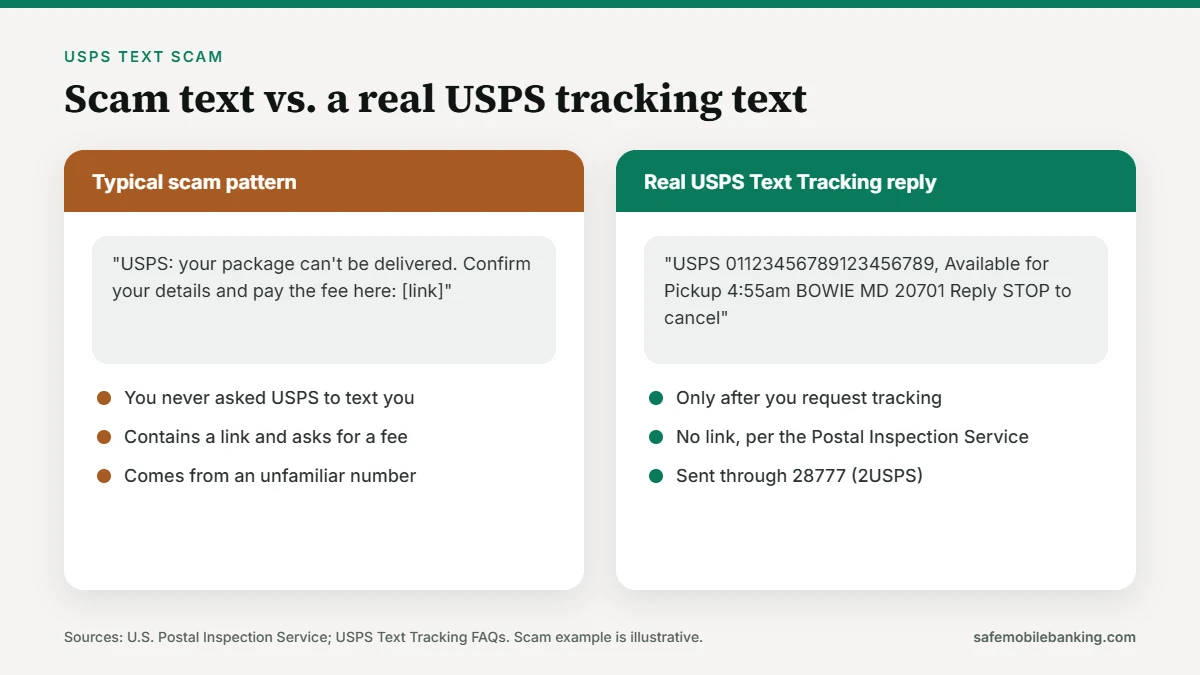
Most fakes fail one simple test: you didn’t ask USPS to text you. The Postal Inspection Service says USPS will not send texts or emails without a customer first requesting the service with a tracking number, and those messages won’t contain a link. Watch for these signs:
| Sign | What the scam text does | What real USPS does |
|---|---|---|
| A link in the message | Asks you to tap a link to fix a delivery problem | Sends no link, per the Postal Inspection Service |
| You never signed up | Arrives out of the blue about “your parcel” | Texts only after you request tracking for a specific tracking number |
| A fee to redeliver | Asks for a small payment to release or reschedule the package | Doesn’t charge for its tracking tools |
| An odd sender | Comes from a number you don’t recognize, not a USPS short code | Uses 5-digit short codes; Text Tracking runs through 28777 (2USPS) |
| Requests for personal data | Wants your address, card number, birth date or Social Security number | Replies with the tracking number, status, place and time |
Pressure is another tell. A scam text wants you to act now, before you stop to check. A real tracking update just reports the status and ends with “Reply STOP to cancel.”
What does a real USPS text look like?
A real USPS Text Tracking reply is short and plain. According to the USPS Text Tracking FAQs, a typical one reads: “USPS 01123456789123456789, Available for Pickup 4:55am BOWIE MD 20701 Reply STOP to cancel.” It names the sender, the tracking number, the status, and the date, time and place in most cases.
You start the conversation, not USPS. You can text your tracking number to 28777 (2USPS) and get the latest status back, or sign up for updates on one tracking number at USPS.com. If you sign up on the website, USPS sends a welcome message and you must reply YES to confirm. Texting STOP to 28777 ends all your Text Tracking messages.
So if a “USPS” text names no tracking number you gave them, or it carries a link, treat it as a USPS text scam and delete it after you report it.
Why do USPS text scams spike during the holidays?
More packages mean more people expecting a delivery text, so a fake one looks normal. On November 24, 2026, USPS shared holiday scam tips as part of the Postal Inspection Service’s 2026 “Don’t Get Hit by Holiday Crime” campaign. The release cites a 2026 AARP survey in which 84 percent of U.S. consumers said they experienced or were targeted by at least one form of fraud during the holidays, including fake messages about delivery problems.
The USPS release gives the rule plainly: don’t click on links or give personal information in response to texts that claim to come from USPS, and don’t call a number that appears as a link in a text. Look up the real contact details yourself.
What should you do if you clicked a USPS text scam link?
Move fast, and start with your money. The Postal Inspection Service says that if you interacted with the link at all, even without pressing “submit,” you should notify your bank or card issuer.
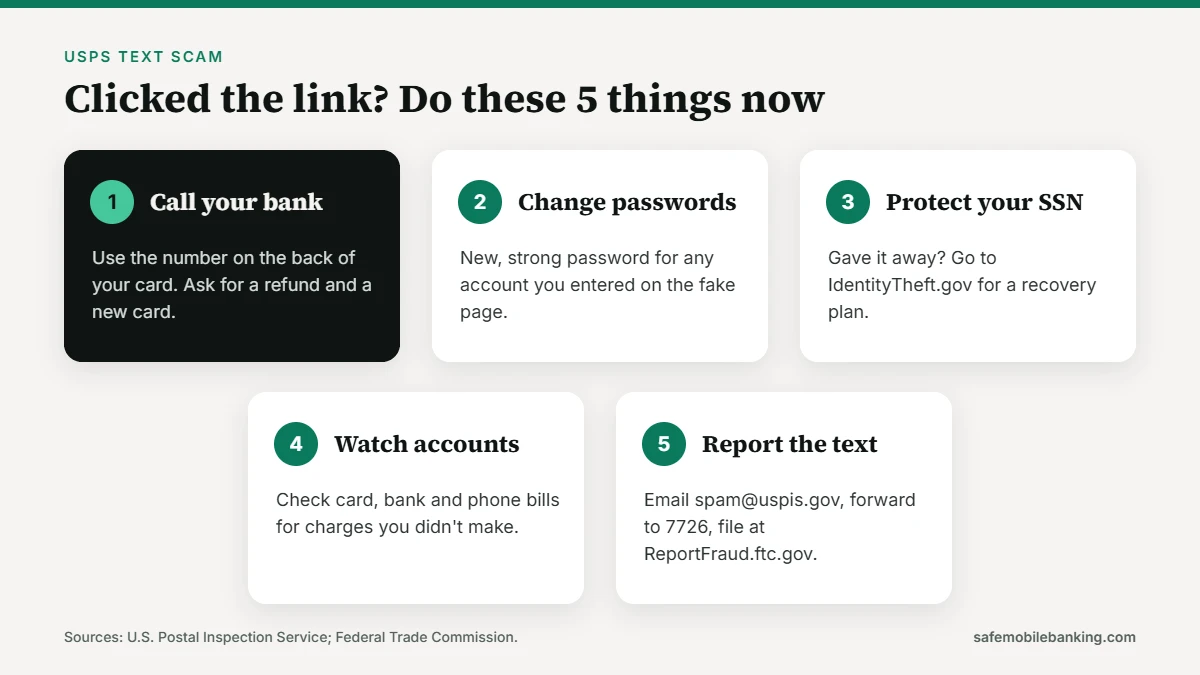
- Call your card issuer or bank. Use the number on the back of your card. The FTC says to report a scam credit card charge to the issuer and ask for a refund; for a debit card, report it to your bank or credit union. Federal law protects you from unauthorized use of both. Ask for a new card number if you typed yours in.
- Change any password you entered. If you typed a username and password on the fake page, create a new, strong password for that account, and for any other account that used the same one.
- Protect your identity if you gave your Social Security number. The FTC says to report misuse at IdentityTheft.gov for a recovery plan. If the number hasn’t been used, or you aren’t sure, follow the steps at IdentityTheft.gov/databreach.
- Watch your accounts. Check card and bank activity for the next few weeks, and review your phone bill for charges you didn’t make, as the Postal Inspection Service advises.
- Report the text. Reporting helps others. The steps are in the next section.
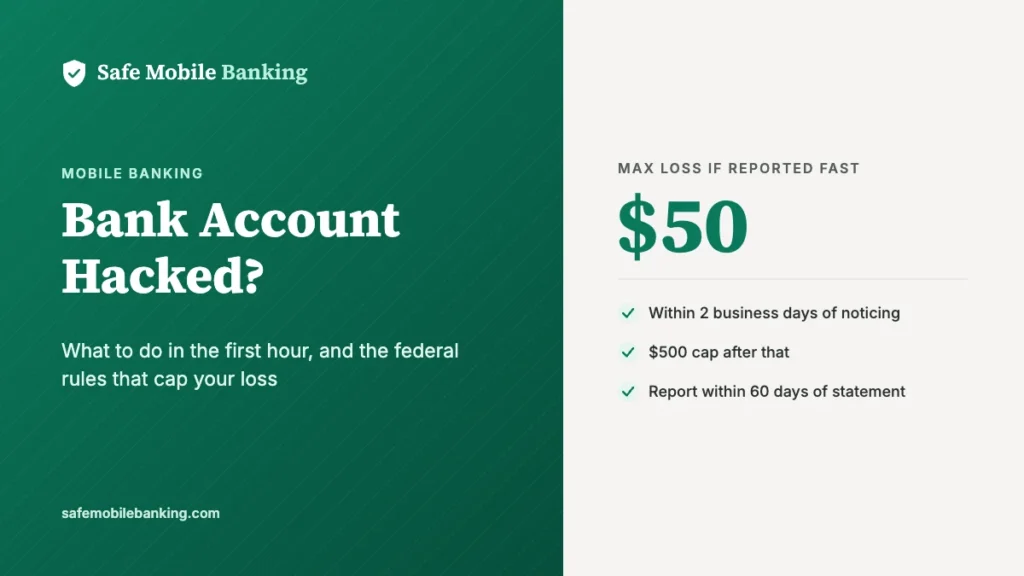
If a scammer also got into your bank login, our guide on what to do if your bank account is hacked walks through the next steps.
How do you report a USPS scam text?
Report it in three places. Don’t tap the link while you do it.
- The Postal Inspection Service. Copy the text of the message, without clicking the link, and paste it into a new email to spam@uspis.gov. Add your name, a screenshot that shows the sender’s number and the date, and whether you clicked, lost money or gave personal information.
- Your carrier. Forward the text to 7726 (SPAM). The FTC says this helps your wireless provider spot and block similar messages.
- The FTC. File a report at ReportFraud.ftc.gov. You can also tap Report Junk in Apple Messages or report spam in Google Messages.
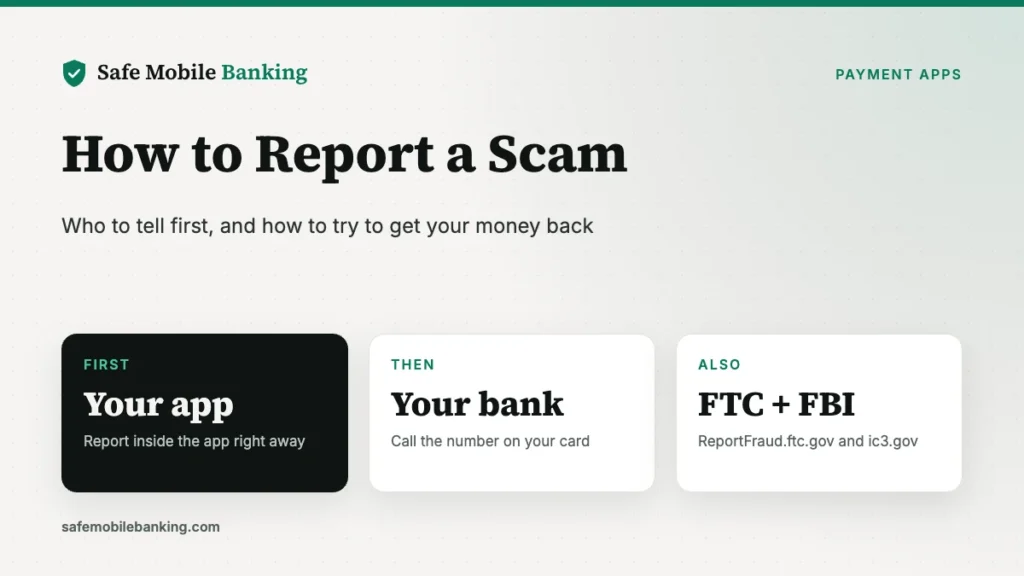
For other scams, see how to report a scam, which lists the right agency for each type.
How can you stop USPS scam texts before they arrive?
You can’t stop every one, but you can cut the volume.
- Filter unknown senders. The FTC notes that your phone may have an option to filter and block spam or messages from unknown senders. Our guide to blocking scam calls on iPhone covers the iPhone settings.
- Ask your carrier to block email-to-text. The Postal Inspection Service suggests calling your carrier (usually 611) and asking it to block all text messages sent to you as email and all multimedia messages sent to you as email.
- Track packages yourself. Use the tracking link in your order confirmation or go to USPS.com directly. Then a surprise text has nothing to offer you.
- Keep your phone updated. The Postal Inspection Service says to keep security software and apps up to date, the same as on a computer.
Not sure whether a request for money is a scam? Answer 8 yes-or-no questions in our payment scam checker.
Check a suspicious payment request (Free. 8 questions. Nothing you type is saved or sent.)
USPS text scam FAQ
Does USPS ever send text messages?
Yes, but only when you ask. USPS Text Tracking sends updates after you text a tracking number to 28777 (2USPS) or sign up for one package at USPS.com. The Postal Inspection Service says USPS won’t text you without that request, and the message won’t contain a link. A surprise text about a parcel you never tracked is a USPS text scam.
What if I opened a USPS scam text but didn’t tap the link?
Don’t tap the link, reply or call any number in it. Report the text, then delete it. The Postal Inspection Service’s warning centers on the link: if you interacted with it at all, even without pressing submit, it says to notify your bank or card issuer. If you never touched the link, reporting and deleting is enough.
I paid the redelivery fee. Can I get my money back?
Maybe. Call your card issuer right away using the number on the back of the card, report the charge as fraud and ask for a refund and a new card. The FTC says federal law protects you from unauthorized use of your credit or debit card. Then watch the account for new charges, because the fee is often a trick to get your card number.
Why do I keep getting USPS scam texts?
You’re not alone. Fake package delivery texts were the most reported text scam of 2024, according to the FTC. Forwarding each one to 7726 helps your carrier block similar messages. You can also filter unknown senders on your phone and ask your carrier to block texts sent to you as email, as the Postal Inspection Service suggests.
Is a USPS text from an email address real?
No. The Postal Inspection Service says USPS uses 5-digit short codes for its text messages, and USPS Text Tracking runs through 28777. A delivery text that comes from an email address or a regular phone number, especially one with a link, is a USPS text scam. Report it and track your package at USPS.com instead.
Where do I report a USPS text scam?
Send a copy of the text, plus a screenshot showing the sender and date, to the Postal Inspection Service’s spam address listed in this guide. Forward the text to 7726 so your carrier can block the number. Then report it to the FTC at ReportFraud.ftc.gov. If money or personal details were taken, call your bank too.
More scam guides
Sources
- U.S. Postal Inspection Service: Smishing: Package Tracking Text Scams
- USPS: USPS Text Tracking FAQs
- USPS Newsroom: Postal Service Shares Tips To Avoid Holiday Scams
- FTC Data Spotlight: Top text scams of 2024
- FTC: How to Recognize and Report Spam Text Messages
- FTC: What To Do if You Were Scammed
This guide is general information, not financial or legal advice. Scam texts change often. Check the Postal Inspection Service for its latest warnings.