Advertiser disclosure: Safe Mobile Banking may earn a commission from some companies we review. This guide on how to report a scam doesn’t promote any company, and commissions never change what we say. How we make money.
Short answer
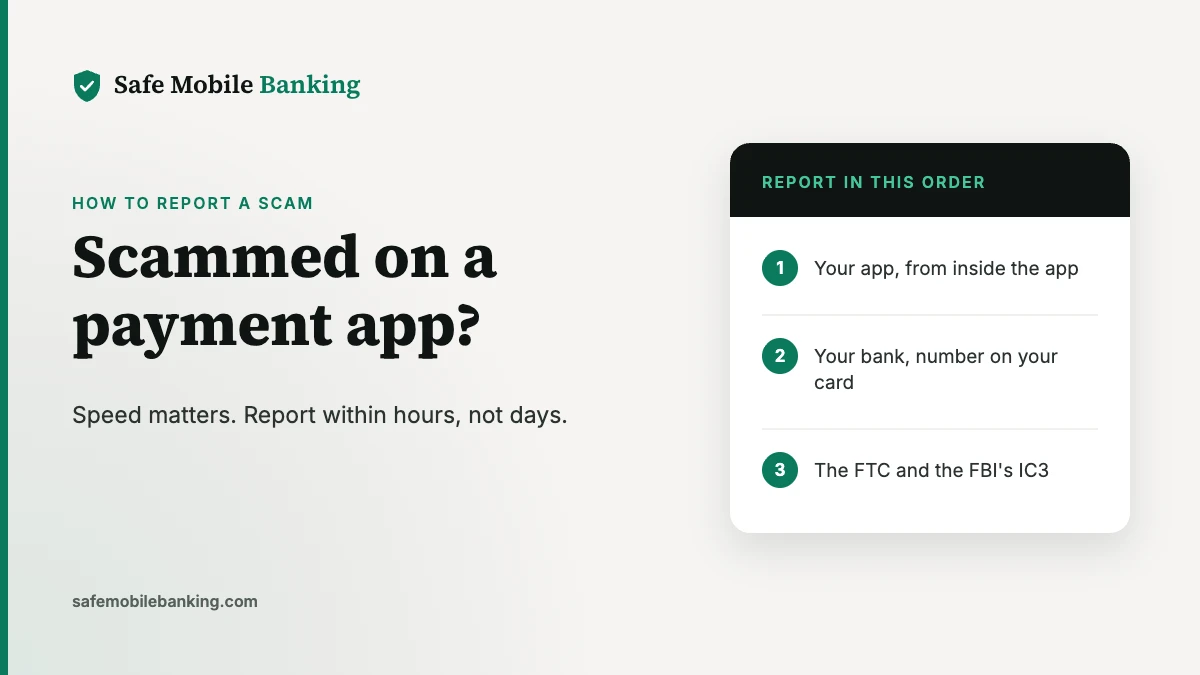
How do you report a scam? Report it in this order: the app you paid through, from inside the app; your bank, using the number on your card; then the Federal Trade Commission at ReportFraud.ftc.gov and, for online scams, the FBI at ic3.gov. Do it within hours. Speed is what gets money back.
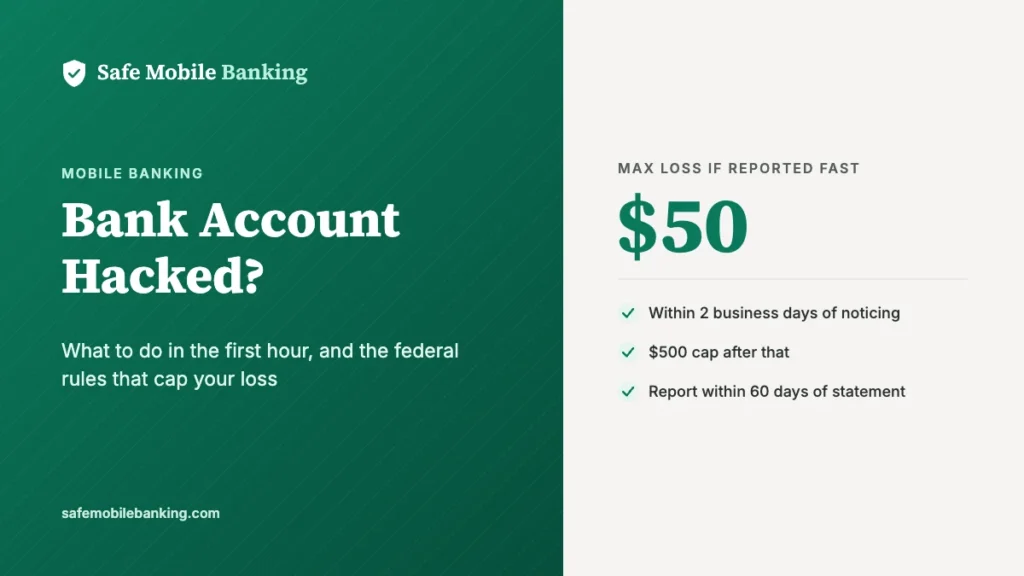
- Report a stolen card or account within 2 business days and federal rules cap unauthorized-transfer losses at $50
- Money you sent yourself is much harder to recover than money taken without permission
- Never pay a “recovery service” that promises to get your money back
Report it now, step by step (Free. Start with step 1 while you read.)
Last verified: November 15, 2026, against the Federal Trade Commission, the FBI’s Internet Crime Complaint Center, the Consumer Financial Protection Bureau’s Regulation E and payment app help centers.
Where to report a scam: the quick list
| Who | How to report | Why |
|---|---|---|
| The app you paid through | From inside the app’s help or activity screen | Can freeze the scammer’s account and reverse eligible payments |
| Your bank or card company | The phone number on the back of your card | Can block cards, dispute charges and start an unauthorized-transfer claim |
| Federal Trade Commission | ReportFraud.ftc.gov | National fraud database used by law enforcement |
| FBI Internet Crime Complaint Center | ic3.gov | Online and crypto scams, especially large losses |
| Consumer Financial Protection Bureau | consumerfinance.gov/complaint | If your bank or app won’t help |
| Scam texts and emails | Forward texts to 7726; forward phishing emails to reportphishing@apwg.org | Helps carriers and email providers block them |
How to report a scam on a payment app, step by step
- Report it inside the app you paid through. Use the app’s own help screen, not a phone number from a search result or a message. Scammers run fake support numbers.
- Call your bank or card company. Use the number on the back of your card. Ask them to block the card, dispute any charges, and open an unauthorized-transfer claim if money left without your permission.
- Change your passwords and turn on 2-step verification, starting with your email and the payment app. If you shared a code or let someone into your phone, assume the account is compromised.
- Report it to the Federal Trade Commission at ReportFraud.ftc.gov.
- Report online and crypto scams to the FBI at ic3.gov, the Internet Crime Complaint Center.
- Save everything: screenshots, usernames, phone numbers, transaction IDs and dates. Every report goes faster with them.
If the FTC’s reporting site is unavailable, for example during a federal government shutdown, report to your bank, the FBI and your state attorney general, then file with the FTC when the site returns.
How to report a scam on PayPal, Venmo, Cash App and Zelle
- PayPal: report the payment or invoice inside your PayPal account, and forward fake emails to phishing@paypal.com. See how to spot a PayPal scam email and PayPal’s Purchase Protection rules.
- Venmo: report the payment from the transaction in the app. Payments to people aren’t protected; purchases marked as goods and services can be. See Is Venmo safe?
- Cash App: report it in the app, at cash.app/help, or by calling 1 (800) 969-1940. See Is Cash App safe?
- Zelle: contact your bank or credit union, which runs your Zelle service. See Is Zelle safe?
- Coinbase and crypto: report it in the app and to ic3.gov. Crypto sent to a scammer is rarely recovered. See Is Coinbase safe?
Can you get your money back after a scam?
It depends on whether you authorized the payment.
- Someone moved money without your permission. Federal rules for electronic transfers, called Regulation E, protect you. Tell your bank within two business days of learning your card or login was stolen and your loss is capped at the smaller of $50 or the amount taken before you reported. Wait longer and it can reach $500. Report unauthorized transfers within 60 days of the statement that shows them, or you can be liable for later transfers.
- You sent the money yourself to a scammer. Regulation E usually doesn’t cover this. Your chances depend on purchase protection (PayPal, and Venmo goods and services payments), your bank’s goodwill, and how fast you report.
- You paid by credit card. Card disputes are often your strongest option for purchases that never arrived.
What should you do if your bank or app won’t help?
File a complaint with the Consumer Financial Protection Bureau at consumerfinance.gov/complaint. The bureau sends it to the company and publishes the outcome in its complaint database, which is how we track each company’s record in our reviews. Companies generally respond within 15 days. You can also contact your state attorney general’s consumer protection office.
After you report a scam, watch out for recovery scams
After a scam, you may hear from someone who promises to get your money back for a fee, sometimes posing as a lawyer, an investigator or a government agency. That’s a second scam aimed at people who just lost money. Real agencies don’t charge to take a report or to return money.
How big is the problem?
Consumers reported losing $15.9 billion to fraud in 2025, according to the Federal Trade Commission, up from more than $12 billion the year before. Text messages were the most common way scammers made contact, and bank payments accounted for the largest losses. The FTC says most fraud is never reported, which is why every report helps.
Frequently asked questions
Where do I report a scam?
Start with the app you paid through, from inside the app, then call your bank using the number on your card. Then report it to the Federal Trade Commission at ReportFraud.ftc.gov and, for online scams, to the FBI’s Internet Crime Complaint Center at ic3.gov.
Can I get my money back after a scam?
Sometimes. If someone moved money without your permission, federal rules for electronic transfers limit your losses when you report quickly. If you sent the money yourself, recovery depends on your app’s purchase protection, your bank and how fast you act.
How fast do I need to report?
As fast as you can. Under federal rules, reporting a lost card or stolen access within two business days caps your loss at $50 for unauthorized transfers. Unauthorized transfers on a statement must be reported within 60 days of that statement.
Does reporting to the FTC get my money back?
Usually not directly. The FTC uses reports to spot patterns and bring cases, which sometimes lead to refunds later. Your best chance of recovering money is your app and your bank, so contact them first.
What if my bank or app won’t help?
File a complaint with the Consumer Financial Protection Bureau at consumerfinance.gov/complaint. The bureau forwards it to the company, which is expected to respond, usually within 15 days. You can also contact your state attorney general.
Sources
- Federal Trade Commission: How to recognize and avoid phishing scams (reporting texts, emails and fraud; checked Nov 15, 2026)
- Consumer Financial Protection Bureau: Regulation E, 12 CFR 1005.6 (liability for unauthorized transfers)
- Consumer Financial Protection Bureau: Submit a complaint
- FBI Internet Crime Complaint Center
- Federal Trade Commission: 2025 fraud reports and losses (March 2026)
- PayPal: How to report suspicious emails and messages
- Cash App: Security (support contacts)
Safe Mobile Banking is a publisher, not a law firm or financial advisor. This guide is general information, not legal or financial advice. See our editorial standards.